Madrid’s greatest travel advantage is the one most visitors underuse: it sits at the exact geographic center of Spain, with more UNESCO World Heritage cities within 90 minutes than any other European capital. Toledo is 33 minutes south by AVE. Segovia is 28 minutes north. Ávila, Cuenca, Aranjuez — all reachable before most cities are even worth getting out of bed for. You can explore a medieval imperial capital in the morning, eat roast suckling pig at 2pm, and be back in Madrid for dinner at 9pm.
The short answer: the best day trips from Madrid are Toledo (UNESCO medieval city, 33 min), Segovia (Roman aqueduct + Alcázar, 28 min), and Ávila (Europe’s most complete medieval walls, 90 min) — all by high-speed Renfe train, no booking required for most. For pure palace lovers, Aranjuez (45 min by Cercanías) and La Granja de San Ildefonso are outstanding. For something off the tourist trail entirely, Buitrago del Lozoya and Chinchón deliver. Deciding between them? Our day trip comparison hub ranks every option side by side.
This guide covers all the main day trips from Madrid — how to get there, what makes each one worth the journey, and honest advice on which to prioritize if your time is limited. Check the Madrid transportation guide for Renfe booking tips and Cercanías passes before you go.
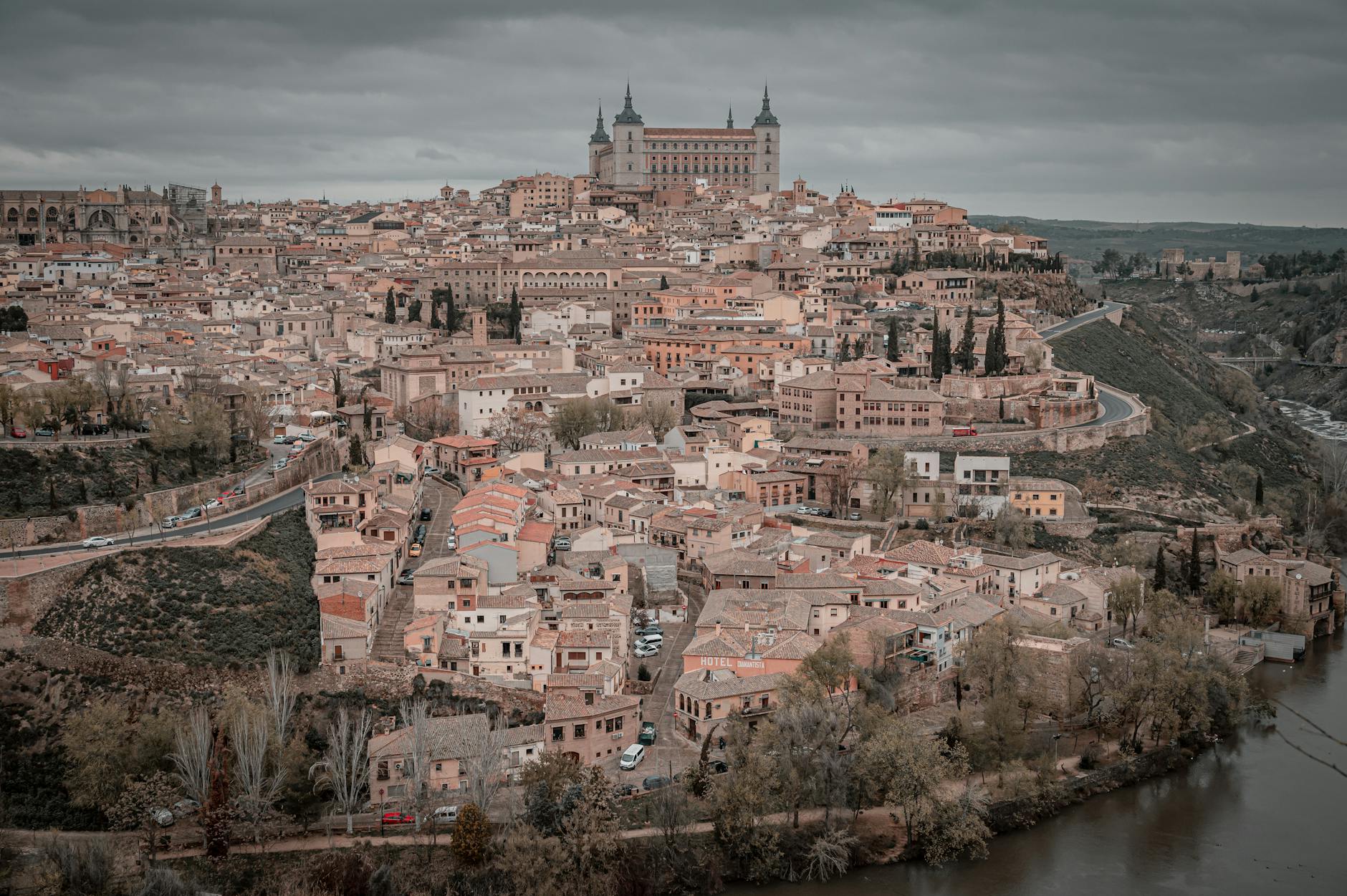
Toledo: The City Three Civilizations Built
Toledo is the consensus best day trip from Madrid, and after visiting you’ll understand why immediately. The city sits on a granite hill wrapped on three sides by the Tajo River — the site has been strategically important for 2,000 years, which is exactly why it’s so dense with history. Christians, Muslims, and Jews all left their mark on the same streets; you’ll find a 12th-century synagogue built by Mudéjar craftsmen for a Jewish congregation, a mosque converted to a church in 1085, and a Gothic cathedral that took 250 years to build and still holds paintings by El Greco, Goya, Velázquez, and Caravaggio.
The practical case is just as strong. The Renfe AVANT high-speed train from Madrid Atocha takes 33 minutes and costs around €23–27 return (2026). Toledo Cathedral costs around €10, the seven-monument Pulsera Turística bracelet around €12, and lunch at a proper Castilian restaurant around €20 — budget around €60–90 for the full day. El Greco’s “Burial of the Count of Orgaz” hangs in the chapel it was painted for in 1586; the Alcázar terrace has the best city views in Castile; the marzipan from Confitería Santo Tomé is worth the queue. You’ll be back in Madrid by 8pm.
👉 Full guide: Toledo day trip from Madrid — itinerary, tickets and tips
Segovia: Roman Engineering and the Best Suckling Pig in Spain
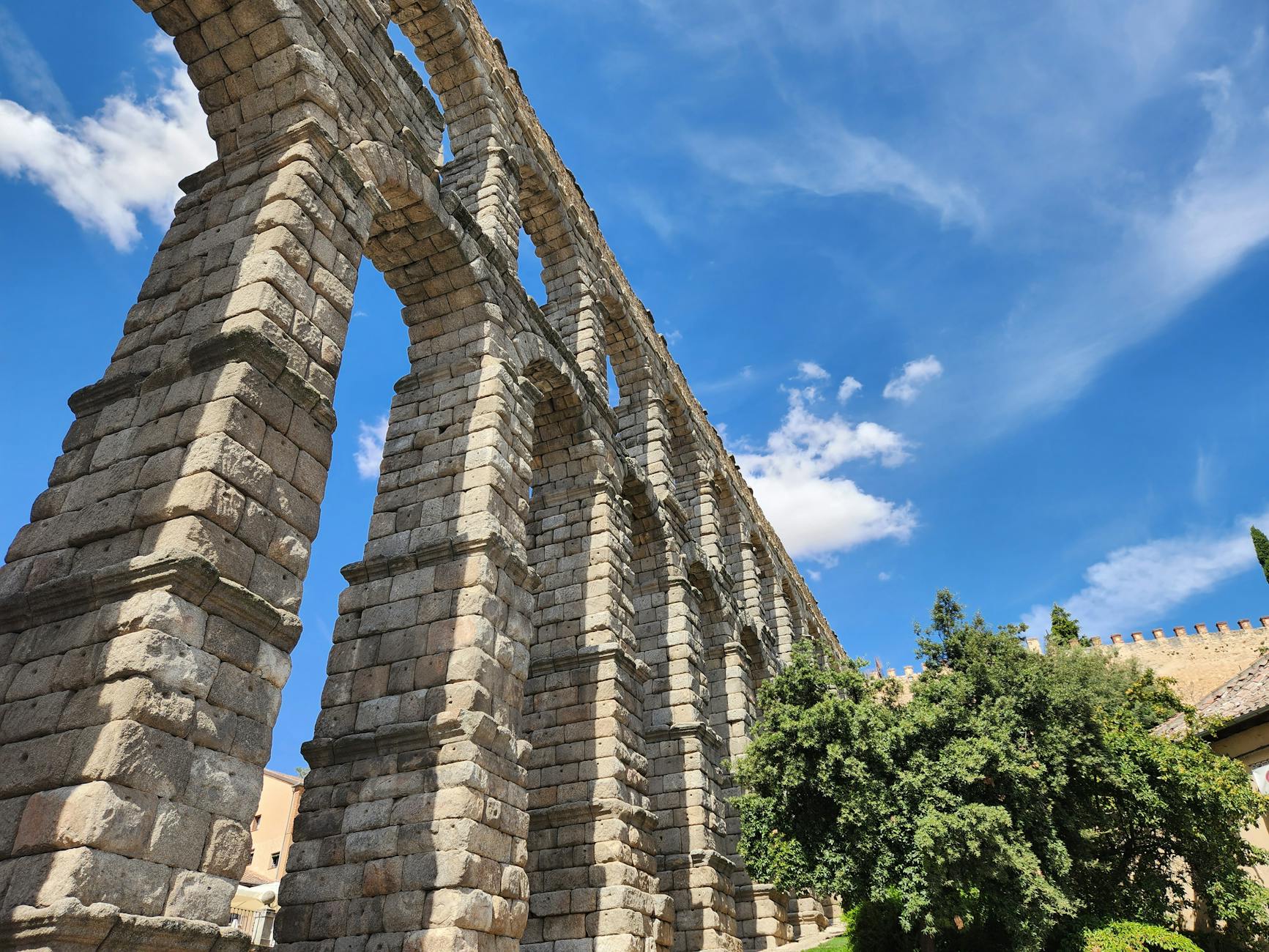
Segovia is the day trip with the highest concentration of genuinely staggering things per square kilometer. A Roman aqueduct from the 1st century AD — 166 arches, no mortar, still standing — runs through the city center as a piece of live urban infrastructure until the 1970s. The Alcázar castle at the far end of the old city inspired Walt Disney’s Cinderella castle design (the Disney company has confirmed this). The late-Gothic Cathedral in between is Spain’s last major Gothic church, built in 1525. And the lunch — cochinillo asado, roast suckling pig carved with the edge of a plate and the plate smashed for luck at Mesón de Cándido — is one of the great Spanish meals.
The AVE from Madrid Chamartín takes 28–32 minutes; round-trip around €25–30 (2026). Book ahead at renfe.com for the best fares. The Segovia-Guiomar station is 6 km from the aqueduct — take Urbano bus 11 (€2, 15 minutes) or a taxi (€10). Reserve cochinillo lunch at least a week in advance in high season.
La Granja de San Ildefonso — the Bourbon royal palace with its extraordinary baroque fountain gardens — is only 11 km from Segovia by bus. Many visitors do both in a single day.
👉 Full guide: Segovia day trip from Madrid — aqueduct, Alcázar and cochinillo
Ávila: The Walls That Have Been Standing for 900 Years
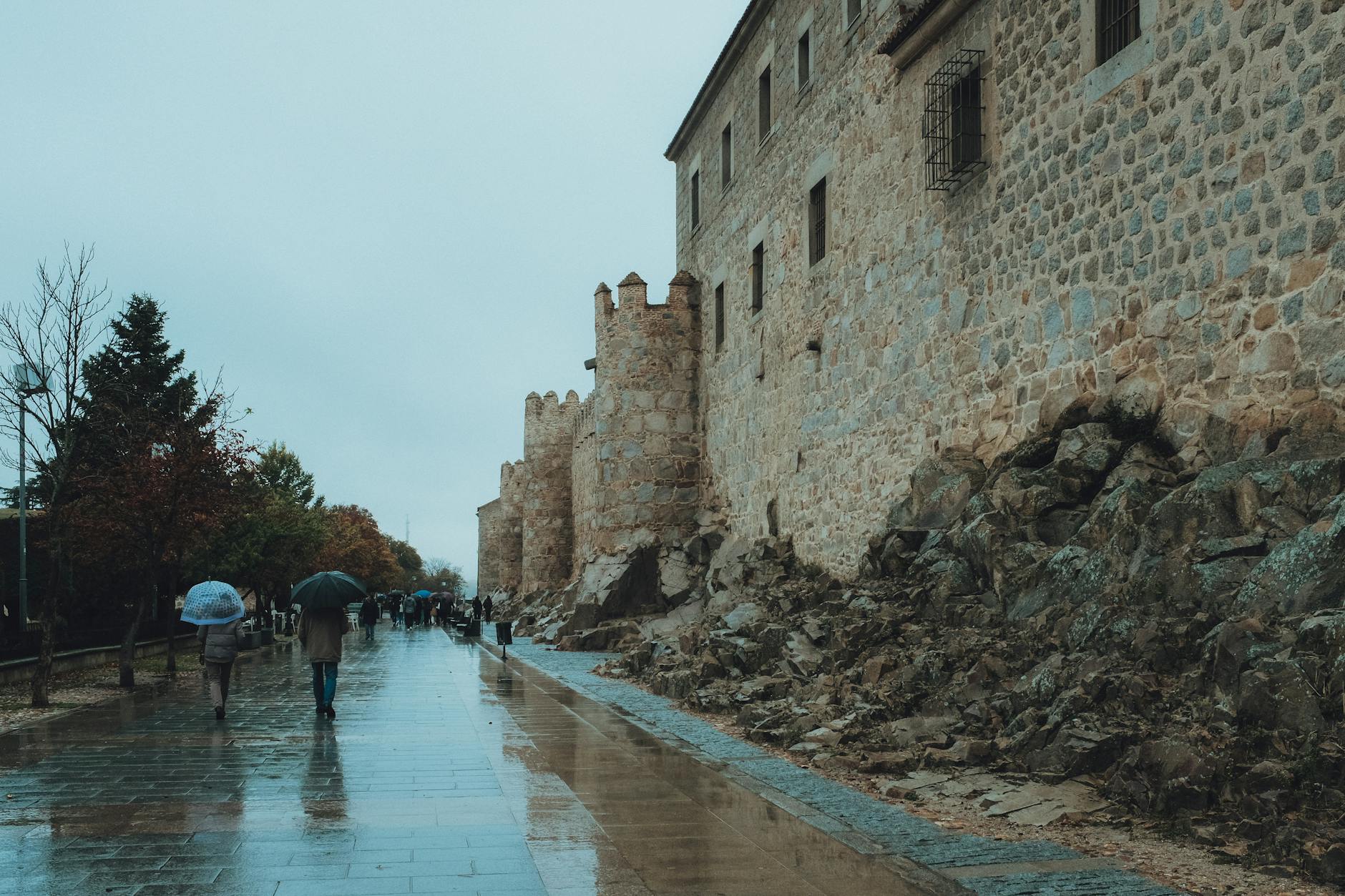
Ávila has Europe’s most complete medieval city walls — 2.5 km of granite, 88 towers, built between 1090 and 1099. You can walk the top of them. The city inside is quieter and less touristy than Toledo or Segovia, which is either a feature or a bug depending on your perspective. I’d call it a feature: the Cathedral (one of the oldest Gothic buildings in Spain, begun in 1135), the Convent of Santa Teresa, and the medieval streets have a contemplative quality the more crowded cities can’t match. The local chuletón de Ávila — a massive T-bone from local cattle — is one of the great Spanish steaks.
The Renfe AVANT from Madrid Chamartín takes around 90 minutes and costs around €22–30 return (2026). Ávila sits at 1,130 meters altitude — bring a layer, it’s reliably 5–10°C cooler than Madrid year-round.
👉 Full guide: Ávila day trip from Madrid — medieval walls, Cathedral and chuletón
Cuenca: The Hanging Houses on the Edge of a Gorge
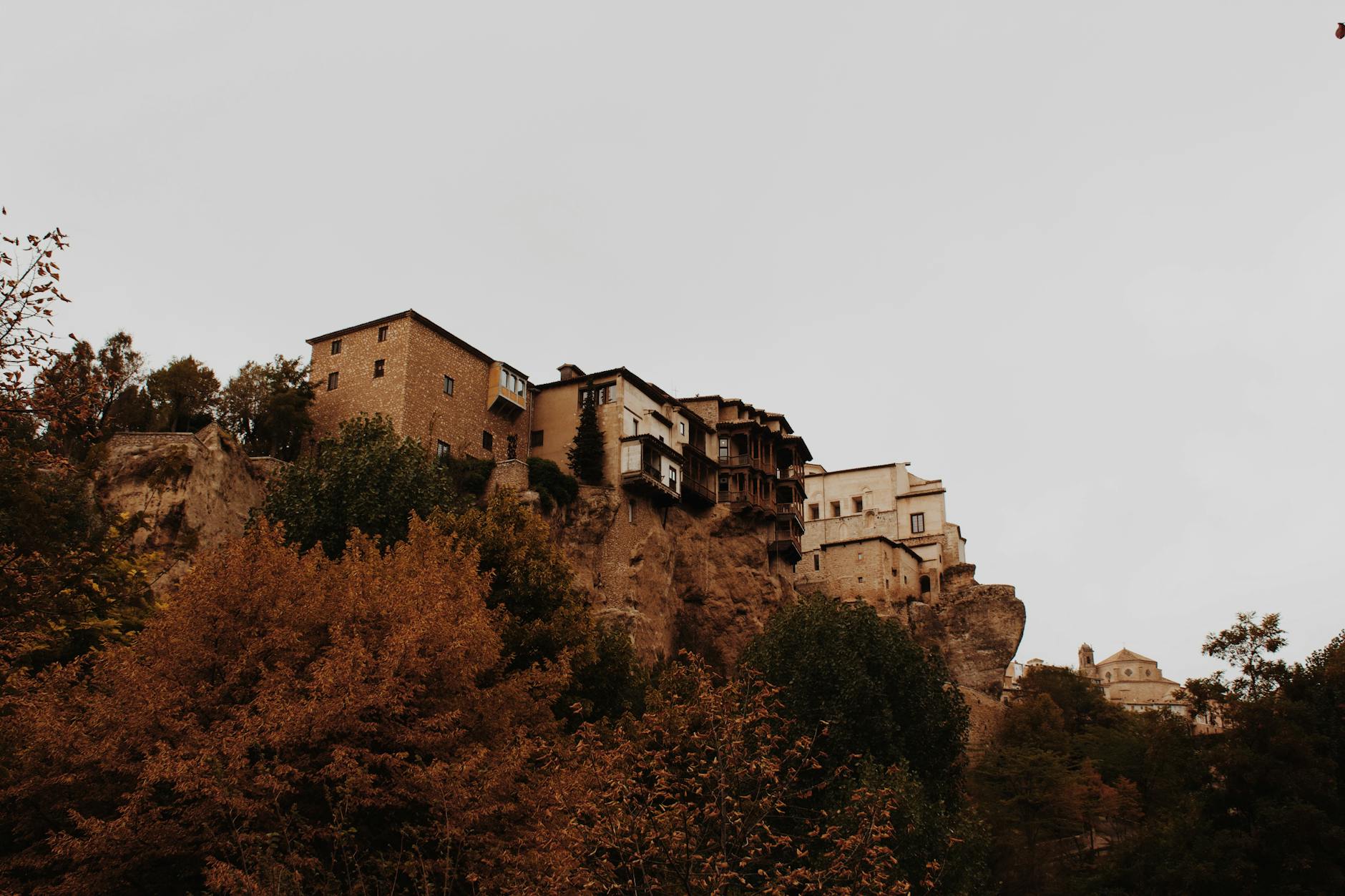
Cuenca is the most underrated day trip on this list. It’s a UNESCO World Heritage city with medieval houses literally cantilevered over a 60-meter limestone gorge — the Casas Colgadas (Hanging Houses) are both structurally improbable and genuinely beautiful. Inside one of them is the Museum of Spanish Abstract Art, which holds the best collection of 20th-century Spanish abstract painting outside Madrid. The city’s old quarter is smaller than Toledo but more dramatic in its topography, and far fewer visitors make the journey.
The AVE from Madrid Atocha takes 55 minutes and costs around €25–35 return (2026). Cuenca is far enough east that it works poorly combined with anything else — give it a full day.
👉 Full guide: Cuenca day trip from Madrid — Hanging Houses and abstract art
Aranjuez: Royal Gardens and Strawberries by the River
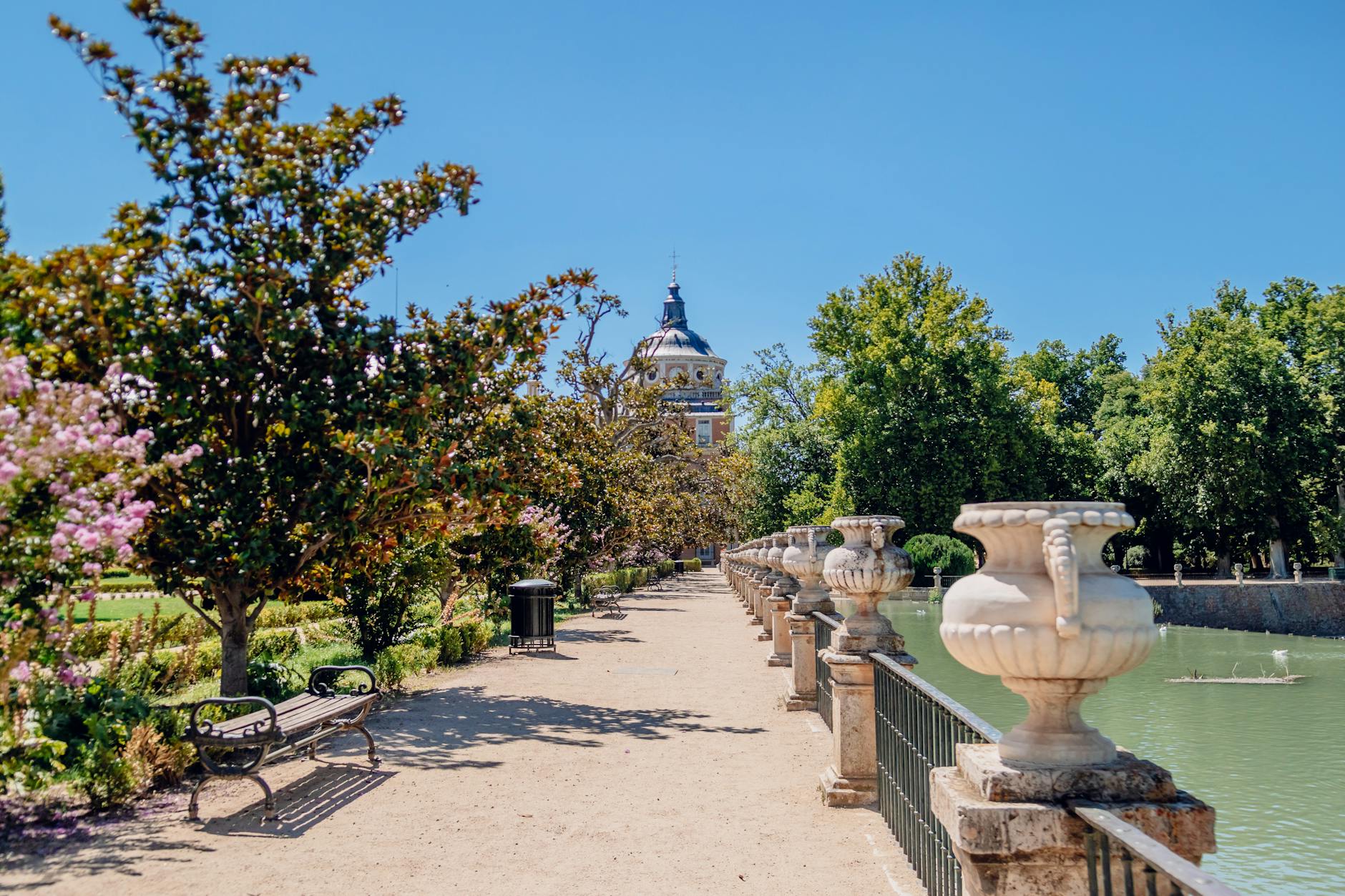
Aranjuez is the easiest day trip from Madrid: 45 minutes by Cercanías commuter train (no booking needed, tickets from €3.60 each way), a Bourbon summer palace with UNESCO-listed gardens, and the famous Fresa de Aranjuez — strawberries that have been cultivated here since the 18th century and are genuinely better than any you’ll find in Madrid. The Strawberry Train (Tren de la Fresa) runs on selected weekends from spring to autumn, combining a vintage journey with tastings en route.
The Royal Palace itself is smaller and more intimate than the one in Madrid — easier to spend time in without feeling overwhelmed. The formal garden system (Jardín del Príncipe, Jardín de la Isla) runs along the Tajo and is at its best in spring. Pair Aranjuez with Chinchón for a full day — the pueblo with Spain’s most beautiful circular plaza is 30 km away by road.
👉 Full guide: Aranjuez palace day trip from Madrid — gardens, palace and strawberries
El Escorial and Valle de los Caídos: Felipe II’s Legacy in the Sierra
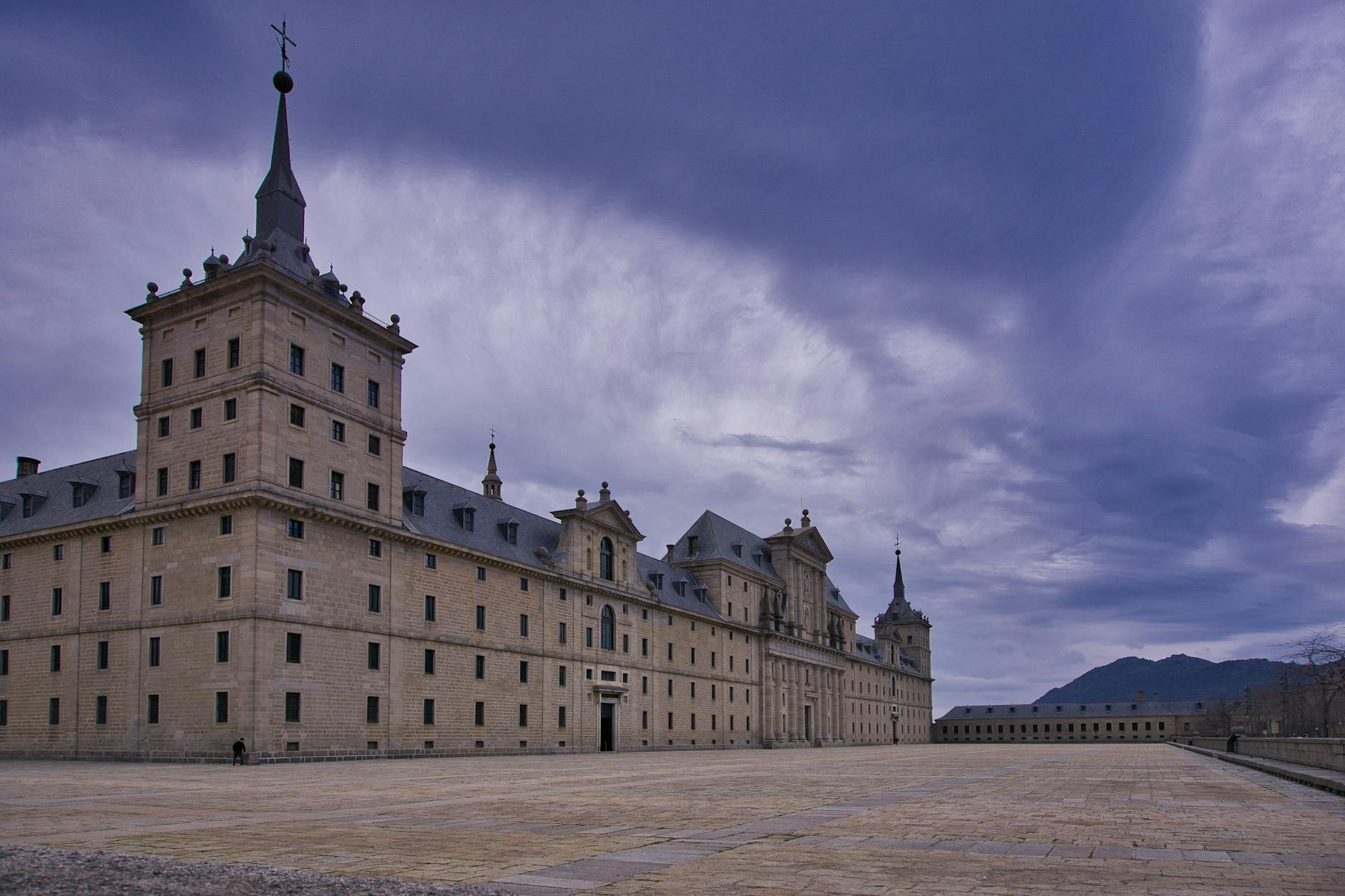
El Escorial is the most austere building in Spain — a UNESCO-listed monastery, royal palace, library, and pantheon commissioned by Felipe II in 1563 and completed in 1584. The library alone contains 45,000 volumes; the Pantheon of Kings below the altar holds the remains of almost every Spanish monarch since Carlos I. It’s not a cheerful place, but it’s a profoundly significant one — the physical embodiment of 16th-century Habsburg power and Catholic piety. The Cercanías C-8a from Madrid Atocha takes about 55 minutes (around €5 return, no booking needed).
Eight kilometers away in the same Sierra, Valle de los Caídos is Spain’s most contested monument — a Civil War memorial built by Franco using forced labour, now the subject of ongoing political debate. Following the 2019 exhumation of Franco’s remains, the site’s function and access continue to evolve. Check current status before visiting; access may be restricted.
La Granja de San Ildefonso: Spain’s Versailles
La Granja de San Ildefonso is 11 km from Segovia and almost always paired with it. The Bourbon royal palace (built 1721–1739 by Felipe V, who missed Versailles and set about recreating it in Castile) is impressive, but the real draw is the gardens: 146 hectares of baroque terraces, fountains, and formal hedges. When the fountains run — on specific dates from spring through autumn, usually Thursdays, Saturdays, Sundays and festivals — it’s one of the most spectacular garden displays in Europe. The 24 fountains are fed by a gravity-powered hydraulic system that’s been operating since the 18th century.
From Segovia, buses run to La Granja in 20 minutes. From Madrid direct, the La Sepulvedana bus from Moncloa takes about 90 minutes.
👉 Full guide: La Granja de San Ildefonso day trip — baroque fountains and royal palace
Chinchón: The Plaza That Stopped Time
Chinchón’s Plaza Mayor is oval-shaped, ringed by wooden balconied galleries on three levels, and was built in the 15th and 16th centuries. It’s used as a bullring in summer. It’s also the best place in Spain to eat cordero asado (roast lamb) at Mesón Cuevas del Vino, which serves it in cave cellars that have been in use since the 16th century. The local anise liqueur has a DOP designation. Chinchón is 45 km southeast of Madrid — about 70 minutes by ALSA bus from Conde de Casal, making it a natural half-day that pairs with Aranjuez if you have a car.
👉 Full guide: Chinchón day trip from Madrid — circular plaza, anise and cordero asado
Buitrago del Lozoya: Medieval Walls and a Surprise Picasso Museum
Buitrago del Lozoya is the day trip almost no foreign visitors make, which is its main recommendation. The medieval walls are completely intact and encircle a hilltop village above the Lozoya reservoir. Inside those walls is a Picasso museum — a small but genuine collection of works Picasso gave to his barber, Eugenio Arias, who was from Buitrago. It’s one of the more unexpected things you’ll find on a day trip from Madrid, and the village feels genuinely untouristy. The Continental bus from Plaza de Castilla takes about 75 minutes (around €6 return).
👉 Full guide: Buitrago del Lozoya day trip — medieval walls and Picasso museum
Alcalá de Henares: The Cheapest UNESCO Day Trip
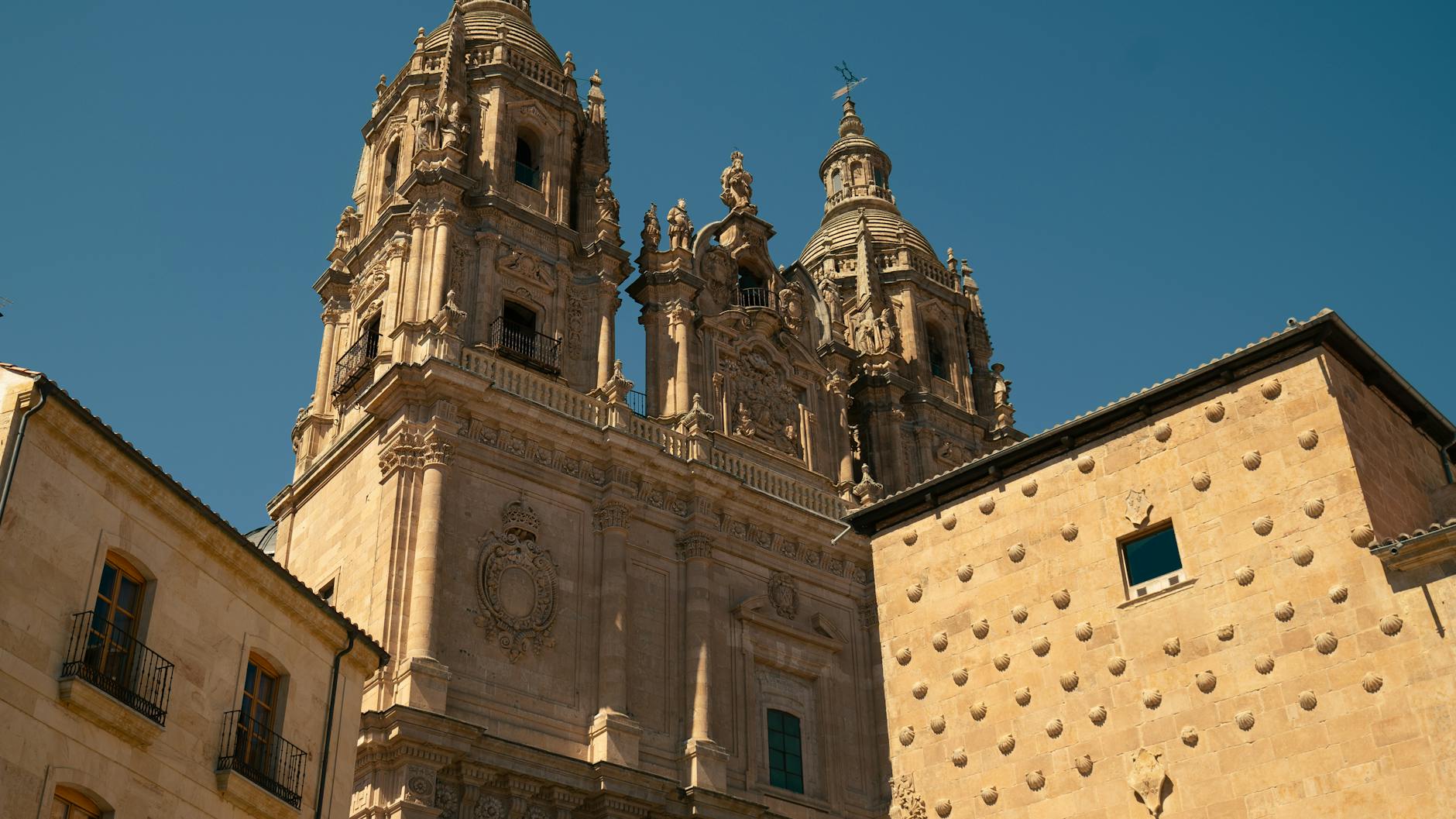
Alcalá de Henares is 35 minutes east of Madrid by Cercanías (around €4 each way, no booking) and deserves more attention than it gets. It’s a UNESCO World Heritage city — the first university city in the world to be purpose-built from scratch, founded 1499 — and the birthplace of Miguel de Cervantes. The university’s Plateresque facade on the Colegio Mayor de San Ildefonso is one of the finest examples of Spanish Renaissance architecture. The old quarter has an elegant colonnade along Calle Mayor and good tapas bars. Half a day is enough, making it the easiest add-on if you have a free afternoon.
👉 Full guide: Alcalá de Henares day trip from Madrid — Cervantes, university and UNESCO
Practical Logistics for Day Trips from Madrid
Which train from which station?
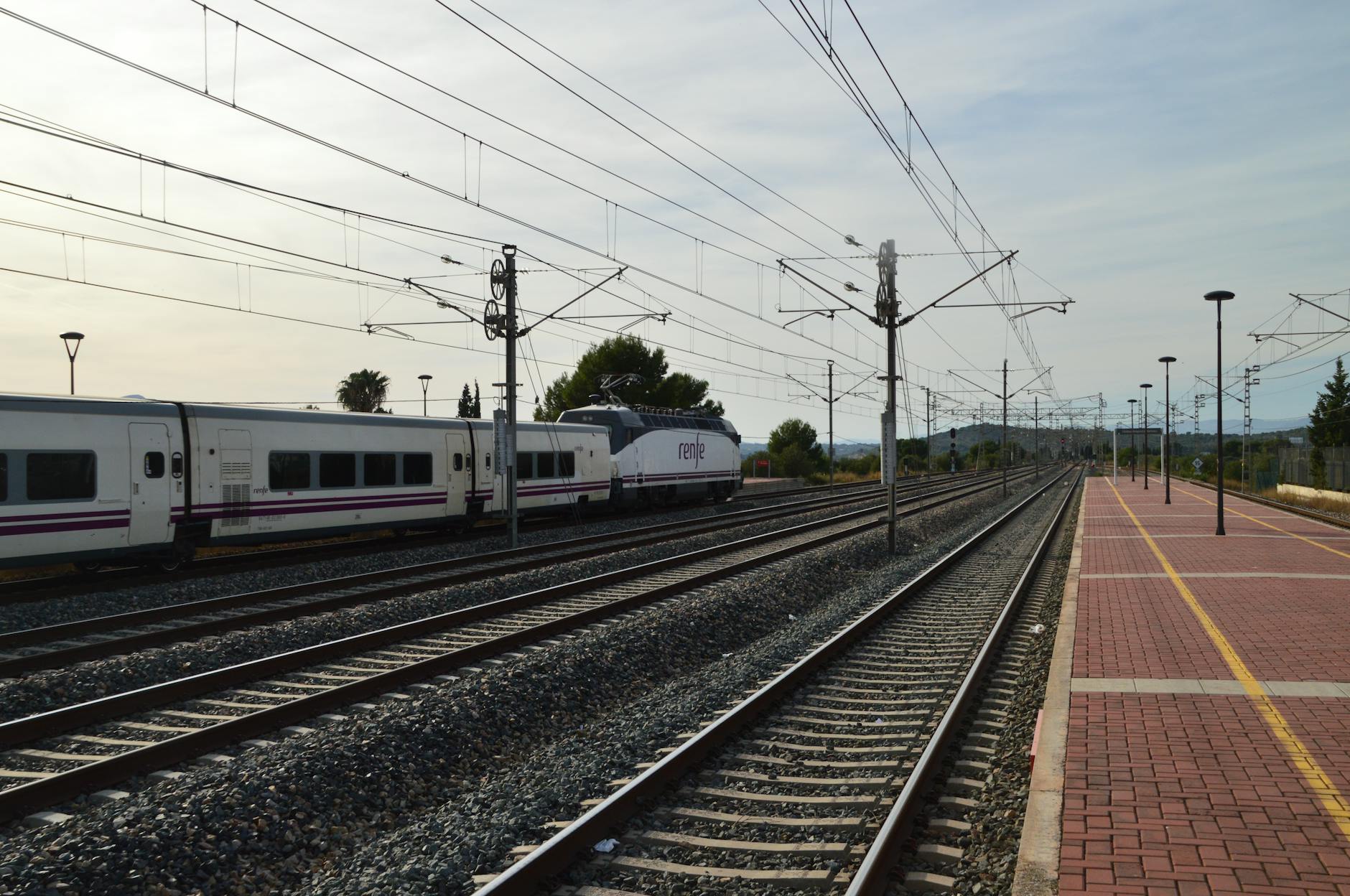
Madrid has two main intercity rail hubs. Atocha (south) serves Toledo (AVANT, 33 min), Cuenca (AVE, 55 min), and Aranjuez (Cercanías C-3, 45 min). Chamartín (north) serves Segovia (AVE, 28 min) and Ávila (AVANT, 90 min). El Escorial uses Cercanías C-8a from both Atocha and Chamartín (55 min). Alcalá de Henares uses Cercanías C-2 from both stations (35 min). For a full breakdown of fares and booking, see the Madrid transportation guide.
Book or walk up?
AVE and AVANT high-speed trains (Toledo, Segovia, Cuenca, Ávila) require tickets — buy at renfe.com. Book 7–14 days ahead for cheaper fares; weekend trains to Toledo and Segovia sell out. Cercanías trains (Aranjuez, El Escorial, Alcalá) don’t need advance booking — just tap in with a Cercanías card or buy at the machine. Buses to Chinchón and Buitrago are walk-up at the terminal.
Which day to avoid?
Mondays are problematic for almost every day trip — major monuments in Toledo, Segovia, and Alcalá close. Sundays are busy but operational. The sweet spot is Tuesday to Thursday: quieter, full opening hours, lunch reservations easier to get.
Season matters more than you’d think
Spring (April–June) and autumn (September–October) are the ideal seasons for all destinations. Summer in Toledo and Cuenca means 38–40°C in narrow stone streets with no shade — genuinely brutal. In summer, go for the mountain-altitude destinations: Segovia, La Granja, El Escorial, Buitrago. Winter is cold but atmospheric — fewer crowds, easier reservations, and Segovia or Toledo covered in frost is genuinely beautiful.
Plan your trip: in-depth day trip guides
This pillar is the overview. These are the close-ups — each guide goes deep on transport, tickets, itineraries, where to eat, and what to skip.
- UNESCO city classics: Toledo (33 min, imperial medieval capital), Segovia (28 min, aqueduct + cochinillo), Ávila (90 min, medieval walls + chuletón), Cuenca (55 min, Hanging Houses). These four are the backbone of any day-trip programme from Madrid.
- Royal palaces: Aranjuez (45 min Cercanías, UNESCO gardens, strawberries) and La Granja de San Ildefonso (11 km from Segovia, baroque fountain gardens). Either beats an afternoon in a generic palace.
- Pueblo and off-the-beaten-path: Chinchón (oval Plaza Mayor, anise DOP, cordero asado) and Buitrago del Lozoya (intact medieval walls, surprise Picasso museum). Both work as half-days.
- Quick and cheap: Alcalá de Henares (35 min Cercanías, around €4 each way, UNESCO, Cervantes). The lowest-effort day trip on this list.
- 20th-century history: Valle de los Caídos (Civil War memorial, best combined with El Escorial). For visitors with a specific interest in Spain’s modern history.
- Compare all options: Best day trips from Madrid — side-by-side comparison hub with rankings by interest, time available, and budget.
Day trips from Madrid: FAQ
What is the best day trip from Madrid?
Toledo, consistently. It’s the most historically layered city in Castile — three civilizations in one square kilometer, 33 minutes by train, and you’ll still be back for dinner. Second choice: Segovia, especially if you care about food (the cochinillo is exceptional). See the full breakdown in the day trip comparison hub.
How many day trips can I realistically do?
On a 5-day Madrid trip, plan 1–2 day trips. Toledo deserves a full day alone. Segovia plus La Granja is a natural full-day pairing (11 km apart). Aranjuez plus Chinchón works well by car. Don’t try to cram three major cities into one day — you’ll see nothing properly.
Do I need a rental car?
No. Toledo, Segovia, Ávila, Cuenca, Aranjuez, Alcalá — all served by Renfe trains. Chinchón and Buitrago have direct ALSA/Continental buses. Only the smallest villages and Sierra hiking trails truly need a car. See Madrid transportation for specifics.
What’s the cheapest day trip from Madrid?
Alcalá de Henares — around €8 return by Cercanías, most monuments free, UNESCO city, Cervantes birthplace. Full day out for under €30 per person all-in if you eat cheaply.
When is the best time of year for day trips from Madrid?
April–June and September–October. Summer works for high-altitude destinations (Segovia, La Granja, El Escorial) but is brutal in Toledo and Cuenca. Winter is cold but atmospheric and crowd-free — worth it if you dress for it.
Also worth knowing: links into Madrid itself
Day trips go better when your Madrid base is sorted. Plan your time in the city with the things to do in Madrid guide, choose accommodation by neighbourhood with the where to stay in Madrid guide, and understand how the rail network connects everything with Madrid transportation. For historical context that makes Toledo and Ávila richer experiences, the Madrid history and architecture guide covers the bigger picture of Castilian heritage.