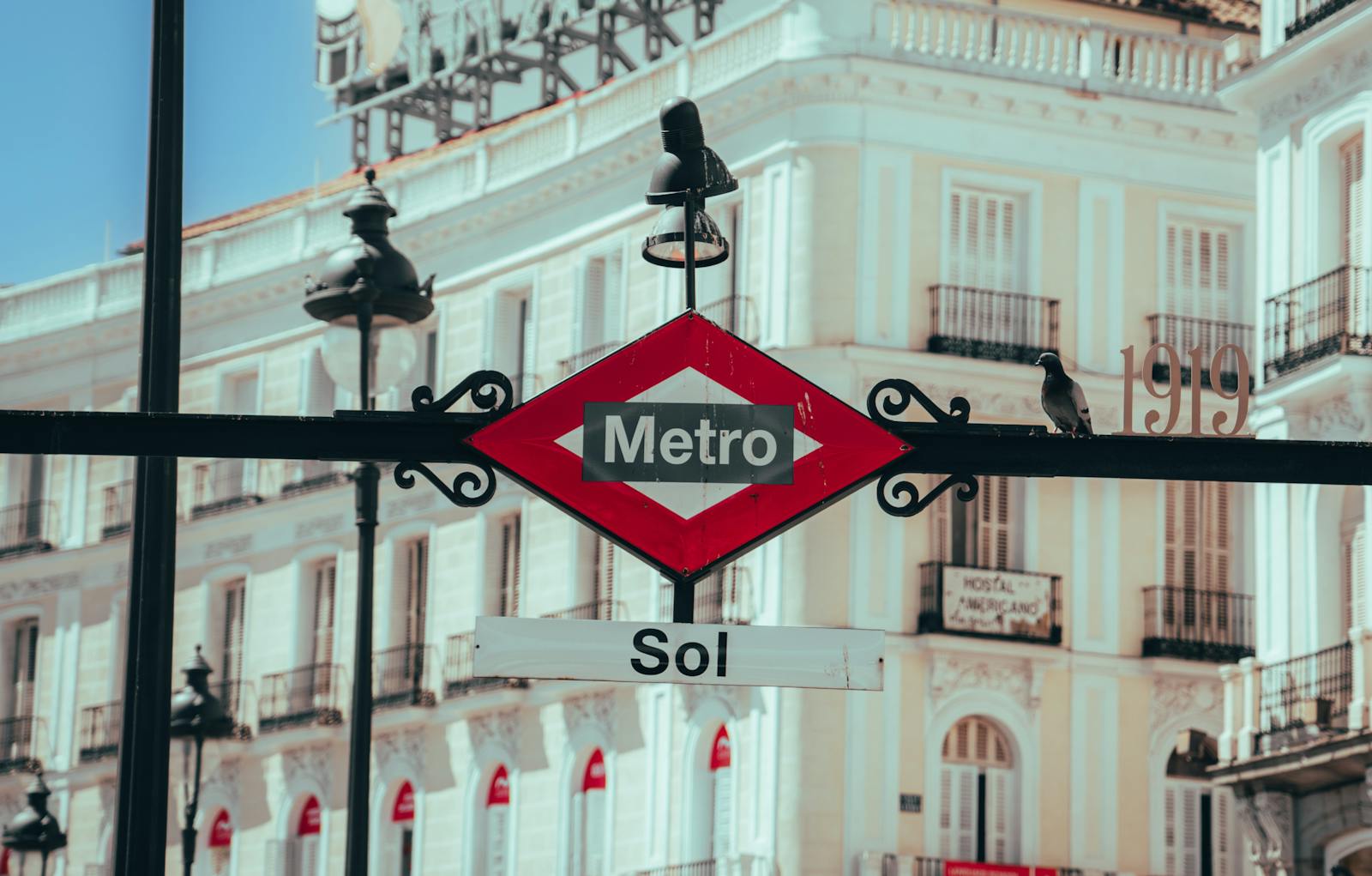
Madrid’s public transport is genuinely one of the best in Europe — fast metro, comprehensive buses, affordable fares. My honest verdict on madrid transportation: take the metro for almost everything, skip renting a car entirely, and budget an extra €3 if you’re arriving on Line 8 from the airport. That airport supplement catches people off guard every time. Get the Tarjeta Multi on day one and you’re set.
The Madrid Metro: What You Need to Know
Thirteen lines, over 300 stations, 294 kilometers of track. The Madrid metro runs from 6:05 a.m. to 1:30 a.m. every single day — which is genuinely good for a city that eats dinner at 10 p.m. Trains come every two to four minutes during the day and every seven minutes late at night. You almost never wait.
Every line is color-coded and numbered, so you can navigate by either convention. For tourists, the lines that actually matter are:
- Line 1 (dark blue) — the north-south spine: Chamartín, Gran Vía, Sol, Atocha, Pacífico
- Line 2 (red) — Ópera (Royal Palace), Sol, Retiro, Ventas (bullring)
- Line 3 (yellow) — Sol, Callao, Plaza de España, Moncloa
- Line 5 (green) — Chueca, Gran Vía, Callao, Carabanchel
- Line 6 (grey, circle) — the ring line connecting every other line; excellent for cross-town transfers
- Line 8 (pink) — the airport express to Nuevos Ministerios — but read the fare note below
- Line 10 (dark blue) — northern suburbs down through Tribunal (Malasaña) and Casa de Campo
Stations at Sol, Gran Vía, and Callao get packed during rush hour — 8 to 10 a.m. and 6 to 8 p.m. Outside those windows, you’ll nearly always find a seat. Air conditioning in summer is excellent. Safety is not a real concern, even at midnight.
Metro Fares for 2026
A single ride within Zone A costs €1.50 to €2.00 depending on how many stations you travel. The best everyday option is the Metrobús 10-trip ticket at €12.20 — that’s €1.22 per ride and it works on buses too. Buy the Metrobús if you’re staying two to four days and not planning heavy cross-town movement.
For longer stays or more active itineraries, the Tourist Travel Pass (Abono Turístico) makes sense: unlimited rides on metro, buses, and Cercanías suburban rail, no individual trip charges. Zone A prices for 2026: €10 for 1 day, €17 for 2 days, €22.50 for 3 days, €27 for 4 days, €32.50 for 5 days, €42 for 7 days. If you’re going out to day-trip destinations, the Zone T pass adds them too (€15 / €25.50 / €34 / €42 / €49 / €61).
All tickets load onto the Tarjeta Multi — a reusable plastic card that costs €2.50 and lasts ten years. There are no paper tickets in Madrid anymore. Buy yours at any metro vending machine (English interface available) the moment you arrive. It can be recharged at every station, at licensed tobacconists with a “T” sign, and at CRTM offices in major stations.
One critical note: Line 8 to the airport carries a €3 supplement on top of any regular fare, bringing total airport metro cost to around €4.50 to €5. The Tourist Travel Pass eliminates this surcharge entirely.
Metro Tips That Actually Save Time
A few things the posted signs won’t tell you:
Stand right on escalators. Madrid commuters are religious about this. Stand on the right, walk on the left. Violate this rule and you’ll feel the social pressure immediately.
Let people off first. Every time, without exception. Madrileños are quite firm about this at the platform door.
Don’t block doorways during rush hour. Step inside the carriage. Trains fill completely in the 8–9:30 a.m. and 6–8 p.m. windows.
Watch your bags at Sol, Gran Vía, and Callao. Pickpockets are real in these stations — keep bags in front of you in crowds. Line 1 and Line 5 in tourist-heavy sections get targeted. This is the one place Madrid’s reputation for crime isn’t overblown.
Check the exit name before you leave. Many stations have three or four street exits. Following the right one saves you a full city block. The word you want is salida.
Use Google Maps or Citymapper. Both have complete real-time Madrid transit data. Download offline maps before you go — signal underground is spotty.
Contactless payment on buses is now standard since 2023 — Visa, Mastercard, Apple Pay, Google Pay all work at the front-door reader. Metro is rolling out the same station by station; Line 1 is live, others follow through 2026.
Children under four ride free. Ages four to eleven pay half price on their own Tarjeta Multi.
Buses: When the Metro Doesn’t Reach
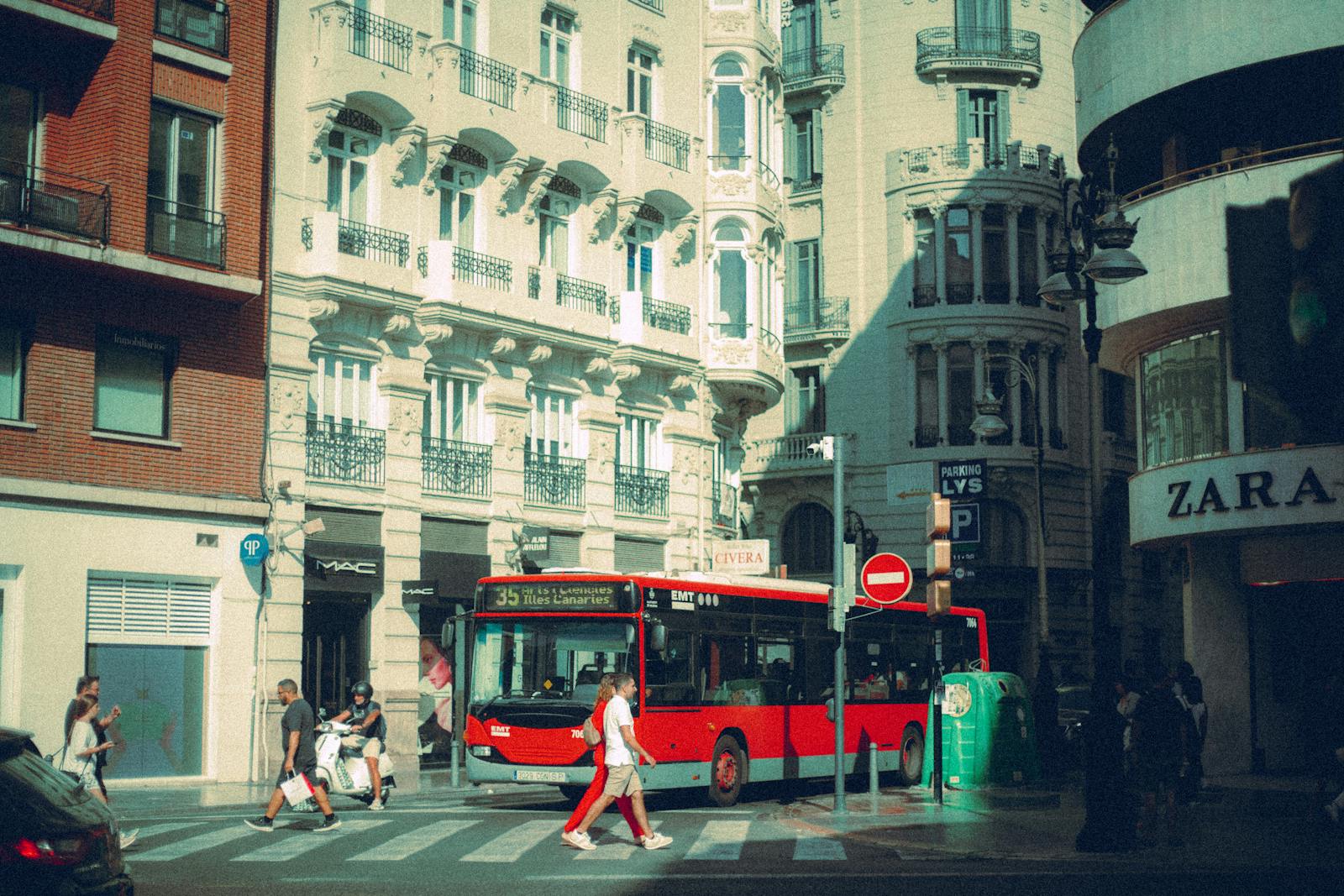
Tourists ignore the buses and then wonder why they’re walking twenty minutes to a museum that a bus would have dropped them at the door. The red EMT fleet runs over 200 routes across the city, roughly 6:00 a.m. to 11:30 p.m., and a single ride costs €1.50 — same as the metro, paid by Tarjeta Multi or contactless card at the front-door reader. The Metrobús 10-trip pass works here too.
A few routes worth knowing: Line 27 runs the full length of Paseo de la Castellana past Cibeles, the business district, and Estadio Bernabéu. Line 2 links Plaza de España, Gran Vía, and Retiro. Route 001 (the old Circular) loops the center, touching Atocha, Cibeles, and Colón. The EMT Madrid app has live GPS tracking — you’ll know the bus is two minutes away before you leave the café.
Buses are also more reliably accessible than the metro for wheelchair users. Every EMT bus has a low floor and dedicated spaces.
Night Buses (Búhos)
When the metro closes at 1:30 a.m., the Búho (Owl) network takes over. Twenty-seven night lines — numbered N1 through N27 — all depart from Plaza de Cibeles and radiate outward to cover the metropolitan area. They run from approximately 11:45 p.m. to 5:45 a.m. with departures every 15 to 35 minutes. Same tickets work, same fares apply. If your hotel is in Malasaña, Lavapiés, Salamanca, or Chamberí, there’s a Búho getting you home.
Getting to/from Barajas Airport
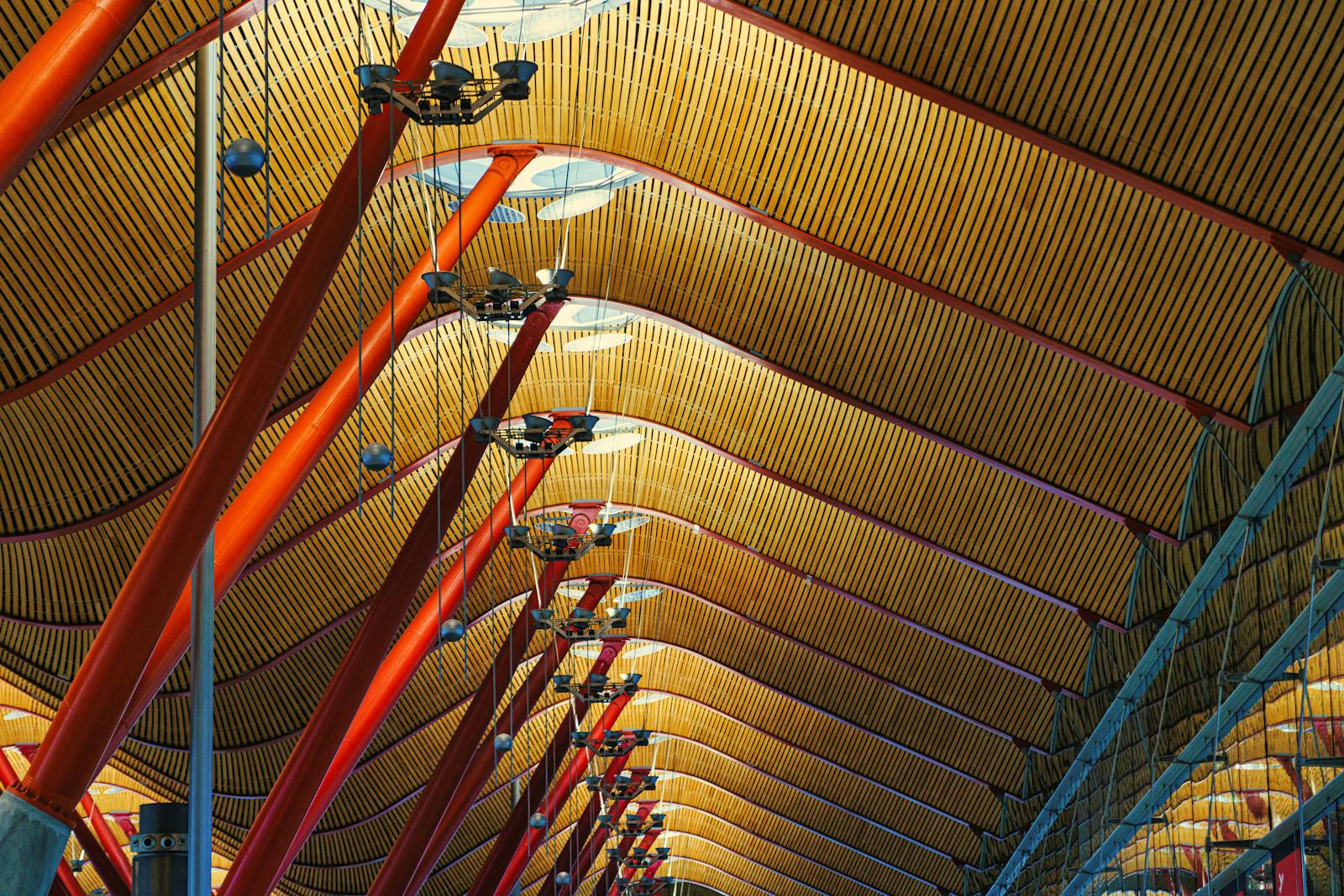
Madrid-Barajas (MAD) sits about 12 kilometers northeast of the center. Four terminals, five ways in. Here’s my honest ranking.
Metro Line 8: Fast and Usually the Right Call
The pink Line 8 runs from Aeropuerto T1-T2-T3 and Aeropuerto T4 to Nuevos Ministerios in about 15–20 minutes. From Nuevos Ministerios you can transfer to Line 6 (the circle line), Line 10, or the Cercanías suburban rail. Service every 4–7 minutes, from 6:05 a.m. to 1:30 a.m.
Total cost: roughly €4.50–€5 including the €3 Line 8 airport supplement. If you have a Tourist Travel Pass, the supplement disappears. Best for solo travelers and anyone with manageable luggage — not every central station has a lift, so large suitcases can be awkward on the transfer.
If you’re thinking about where to stay close to the airport, we have a guide to hotels near Madrid airport worth checking before you book.
Cercanías C-1: The Cheapest Option
From Terminal 4 only, Renfe’s C-1 commuter line goes directly to Chamartín, Nuevos Ministerios, Sol, and Atocha for just €2.60. Trains every 30 minutes, running roughly 6:00 a.m. to midnight. Arriving at T1, T2, or T3? There’s a free inter-terminal shuttle that adds about 15 minutes. Atocha puts you steps from the Prado and Reina Sofía — excellent if that’s your neighborhood.
Airport Express Bus (Line 203): The 24-Hour Option
The yellow “Exprés Aeropuerto” bus runs 24 hours a day, 365 days a year — the only airport link that does. Daytime service goes to Atocha; from 11:30 p.m. to 6:00 a.m. it terminates at Plaza de Cibeles. Journey time 25–40 minutes. Fare: €5, cash to the driver (no coins larger than €20 accepted). If your flight lands at 4 a.m., this is your bus.
Taxi: ~€30 Flat Rate
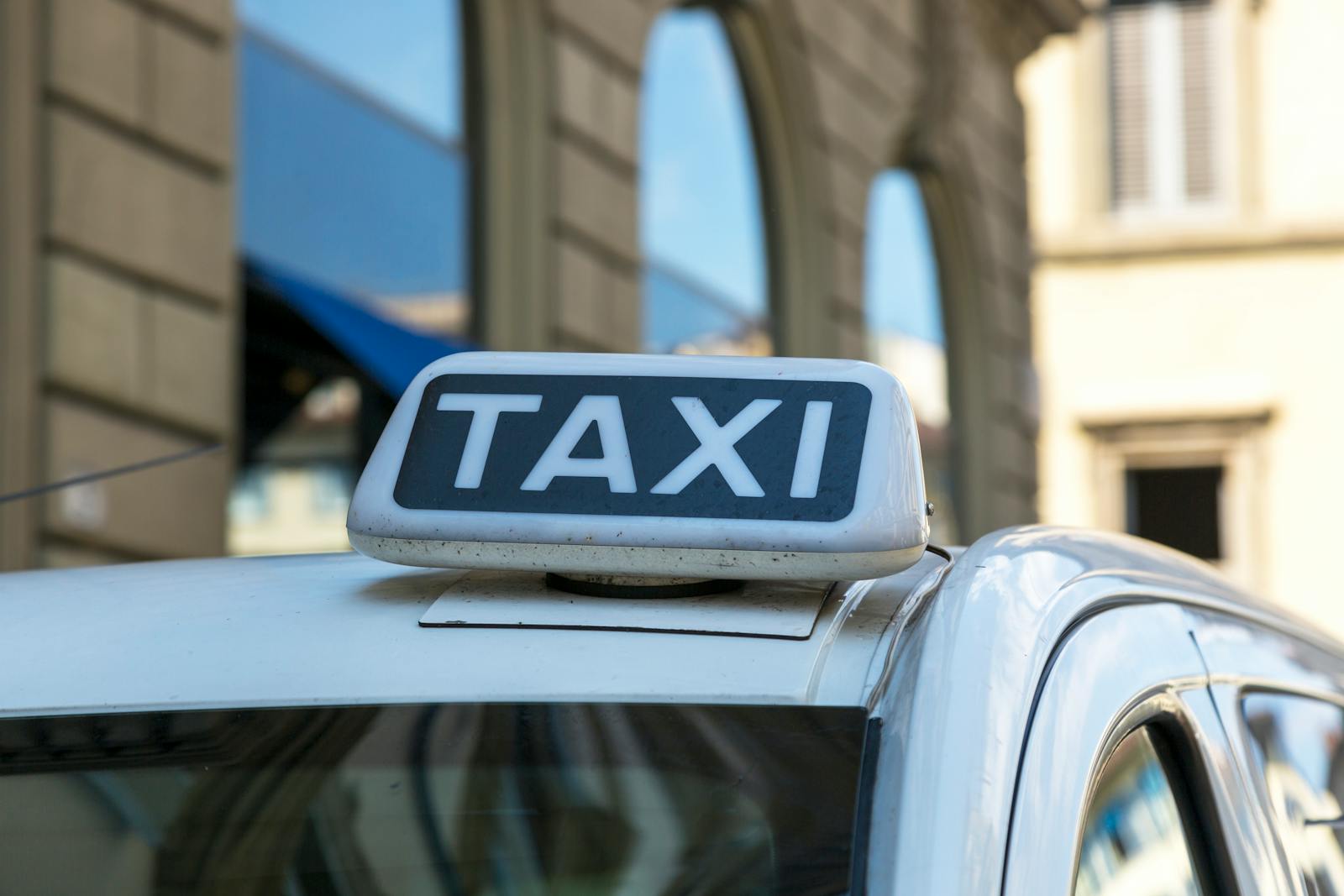
Official Madrid taxis run a flat ~€30–€33 fare between the airport and anywhere inside the M-30 ring road, which covers essentially all hotel neighborhoods. Outside the M-30 the meter kicks in. White cabs with a diagonal red stripe — always official. Queue at the signposted rank outside arrivals; never accept a ride from someone approaching you inside the terminal. Good value for two or more travelers splitting the cost.
Ride-Hailing (Uber, Bolt, Cabify, FreeNow)
All four apps operate from the airport, using dedicated VTC/private-hire pickup points (follow those signs, not the taxi rank). Fares to the center typically run €20–€35 depending on demand. At off-peak hours Bolt tends to be cheapest; during surge the fixed taxi fare often wins. FreeNow is interesting — it flags an official Madrid taxi but gives you in-app estimates and cashless payment.
AVE High-Speed Trains: Day Trips from Madrid
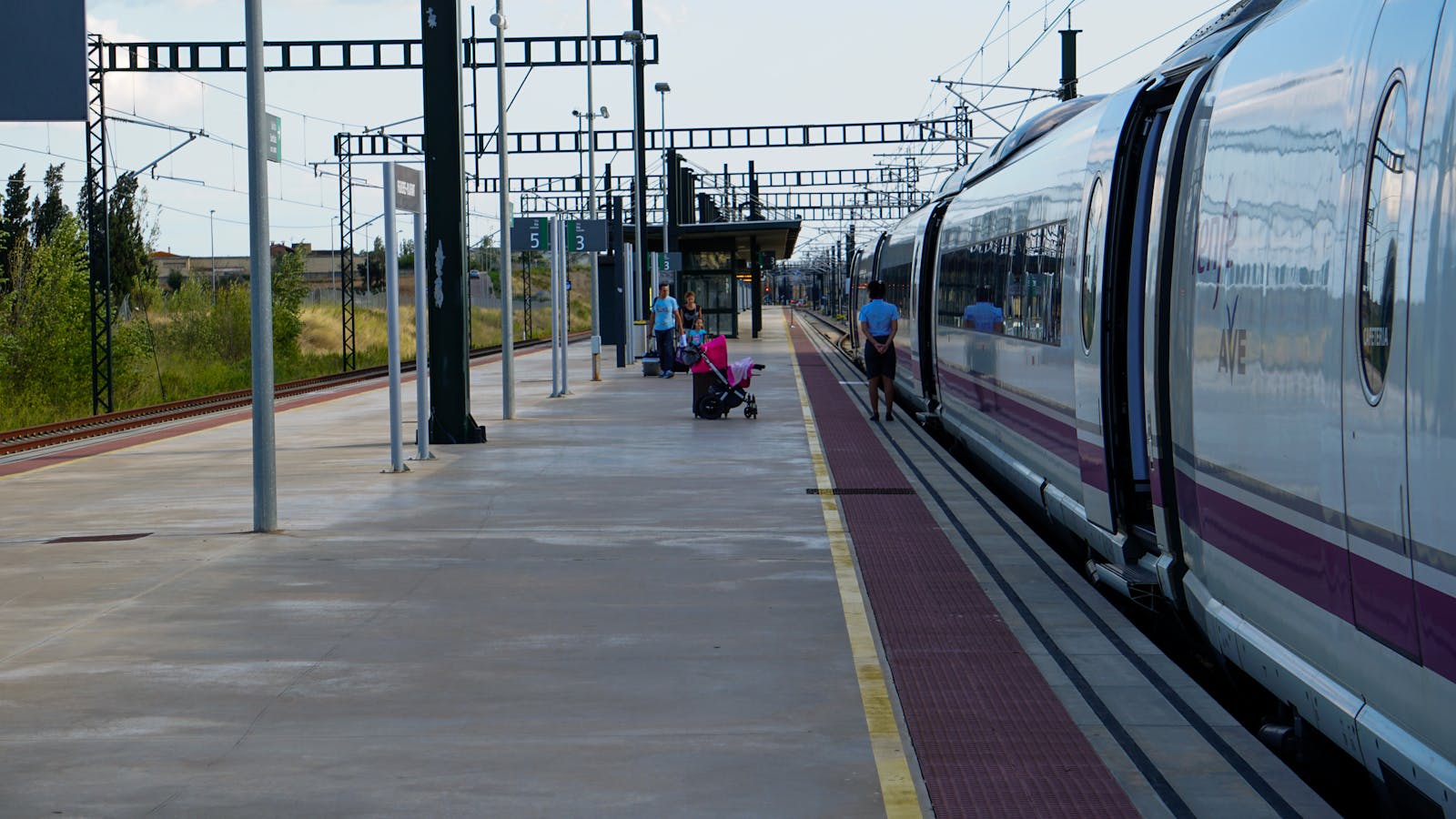
Madrid is Spain’s rail hub, and the AVE network is genuinely impressive. Two stations: Atocha for southbound trains (Toledo, Seville, Málaga, Córdoba, Valencia, Barcelona) and Chamartín for northbound (Valladolid, Bilbao, Zaragoza, Barcelona via the north). Both are on the metro.
For day trips, the numbers are remarkable:
- Toledo — 33 minutes by AVE from Atocha, around €13 one-way. One of the best day trips from Madrid you can do. See the Toledo day trip guide for what to prioritize when you’re there.
- Segovia — 30 minutes by high-speed train from Chamartín, around €15. The aqueduct alone is worth it. Full details in the Segovia by train guide.
- Seville — 2 hours 30 minutes, from around €35 booked in advance
- Barcelona — 2 hours 30 minutes, from around €35 booked ahead on Ouigo or Avlo
Book on Renfe.com, Ouigo.com, or Iryo.eu — prices drop significantly 30 to 60 days out. Security is airport-style, so arrive 15 minutes early. For a comprehensive look at where to go on day trips, see the day trips from Madrid guide.
Cercanías: The Suburban Rail Network
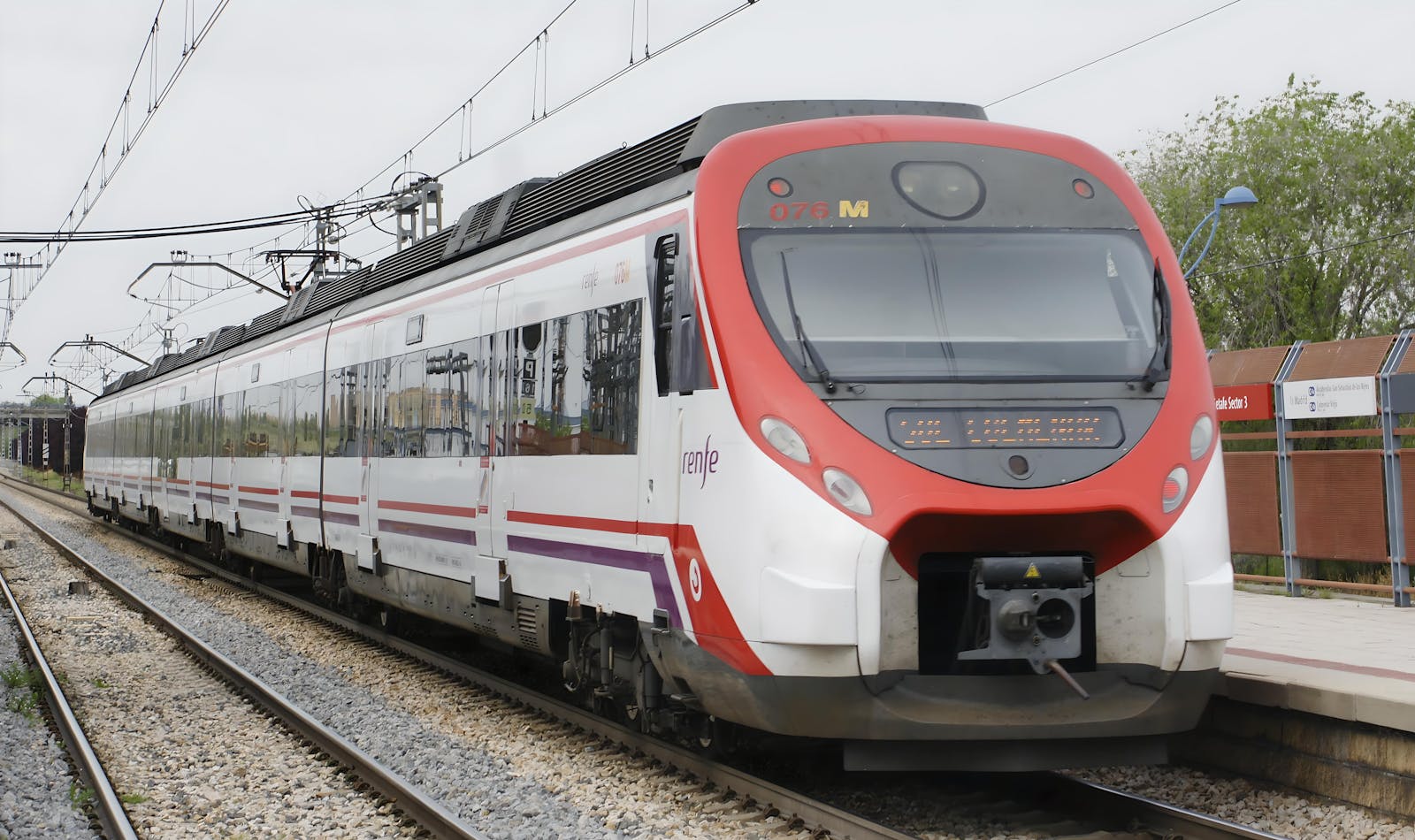
For destinations just outside the city — El Escorial, Aranjuez, Alcalá de Henares — Cercanías commuter trains are the answer. Ten lines connecting at Atocha, Chamartín, Nuevos Ministerios, Recoletos, and Sol. Fares start at €1.70 for a single zone and top out around €4.05 for El Escorial or Aranjuez. A Zone T Tourist Travel Pass covers all Cercanías within the metropolitan area, which is why it pays off if you’re doing more than one day trip.
Ride-Hailing, Taxis and Cycling in the City
Madrid has over 15,000 licensed taxis. White cars, diagonal red stripe on the front doors, city coat of arms. Metered fares start at €2.50 during the day (Monday to Friday, 7 a.m. to 9 p.m.) and €3.15 evenings and weekends, plus €1.10–€1.30 per kilometer. Supplements apply at Chamartín, Atocha, and the IFEMA convention center. Card payment is universal; rounding up is polite, tipping isn’t expected.
Uber, Bolt, Cabify, and FreeNow all operate freely in the city. For cross-town trips at off-peak hours they’re often marginally cheaper than the meter. Cabify has the highest-quality vehicles on average; Uber is fastest to find; Bolt is typically cheapest. All have English interfaces and accept foreign cards. During surge pricing on Friday and Saturday nights, the meter taxi is usually the safer bet on price.
For cycling: BiciMAD is Madrid’s public electric bike-share system. Over 600 docking stations, 7,500 electric-assist bikes. A casual day pass costs €5 and then you pay €2 per 30-minute block. The electric assist makes the city’s mild hills manageable. Best routes for visitors: Madrid Río (10 flat car-free kilometers along the Manzanares) and the circuit around Retiro Park. The BiciMAD app handles registration and pickup.
Private rental shops — Rent & Roll Madrid, Trixi Madrid — offer standard and e-bikes plus guided tours if you’d rather not deal with the app.
Driving: The Short Answer is Don’t
If your whole trip is inside Madrid, skip the rental car entirely. The Madrid Central low-emission zone restricts access by vehicle category, one-way streets are Byzantine, and parking costs €2–€4 per hour in the center. Public transport will be faster and cheaper every time.
That said, a car makes sense if you’re doing multi-stop road trips to La Mancha, the Sierra de Guadarrama, or wine country like Ribera del Duero. Pick up at the airport, not downtown — cheaper and you avoid driving into the center immediately. Expect €30–€60 per day for a compact; add €15–€30 for automatic transmission, which is less common in Spain. All cars entering the M-30 need a valid environmental sticker — major rental agencies have this covered, but confirm at the counter.
Practical Notes
Madrid is one of Europe’s most walkable city centers. The triangle from the Royal Palace to the Prado to Sol covers most of what you came to see, and it’s about 2 kilometers per side. Walking from Sol to the Prado takes 15 minutes. Royal Palace to Sol, 10 minutes. Expect 10–20 kilometers on a full sightseeing day. Comfortable shoes are non-negotiable — cobblestones everywhere.
Summer heat (June through September) makes midday walks unpleasant. Plan longer walks for mornings and evenings. The metro is air-conditioned and a legitimate refuge from the midday heat.
For your Madrid itinerary, factor in the Búho night buses when planning late evenings — the metro closing at 1:30 a.m. doesn’t mean you’re stuck. It means you switch to the N lines radiating from Cibeles. And if you’re building out a Madrid travel budget, transport is genuinely one of the cheaper line items — the Metrobús at €12.20 will cover most of a three-day visit if you’re not commuting across the city constantly.
For deciding which neighborhood to base yourself in and how that affects your daily commute, the where to stay in Madrid guide has a breakdown by area and metro access. And if you want the full scope of what the city has to offer beyond transit, the things to do in Madrid guide is worth reading before you finalize your days.
Frequently Asked Questions
What is the best way to get around Madrid?
Madrid transportation is built around a metro that covers almost everything tourists need, with trains every 2–4 minutes and 300+ stations. For short surface hops, EMT buses are underrated. The Tarjeta Multi card is your single transit key for everything. Get one at the airport vending machine the moment you land.
How much does the Madrid metro cost?
A single ride within Zone A is €1.50–€2.00 depending on distance. The Metrobús 10-trip pass costs €12.20 (€1.22 per ride, works on buses too). Tourist Travel Pass is unlimited and runs €10 (1 day) to €42 (7 days) for Zone A, with no airport surcharge.
How do I get from Barajas Airport to the city center?
Metro Line 8 to Nuevos Ministerios in about 20 minutes (€4.50–€5 total including airport supplement). Cercanías C-1 from T4 to Atocha for €2.60. Airport Express Bus Line 203 to Atocha/Cibeles 24 hours a day for €5. Taxis charge a flat ~€30–€33 to anywhere inside the M-30.
Is Uber available in Madrid?
Yes — Uber, Bolt, Cabify, and FreeNow all operate. Fares from the airport to the center typically run €20–€35. Pick up from dedicated VTC/private-hire zones at the airport, not the taxi rank.
What is the Tarjeta Multi?
A reusable plastic transit card that holds all Madrid transport tickets. Costs €2.50, valid for 10 years. No paper tickets exist in Madrid — the Tarjeta Multi is required for single rides, 10-trip packs, and tourist passes. Buy at any metro vending machine.
Does the Madrid metro run 24 hours?
No — it runs 6:05 a.m. to 1:30 a.m. daily. After closing, the Búho night-bus network (N1–N27) runs from Plaza de Cibeles until 5:45 a.m. The Airport Express Bus 203 runs 24/7.
Can I use contactless payment on Madrid buses?
Yes, since 2023. EMT buses accept contactless Visa, Mastercard, Apple Pay, and Google Pay at the front-door reader. Metro is rolling this out line by line through 2026.
Is it safe to use the Madrid metro at night?
Yes. It’s monitored, well-lit, and safe at all hours. Standard pickpocketing awareness applies in crowded tourist stations (Sol, Gran Vía, Callao) — keep bags in front, don’t leave your phone on a café table, and you’ll have no issues.
Most trips to Madrid start and end at Barajas, and the airport has quirks worth knowing before you land: two separate terminal complexes, a free bus between them, and a satellite building that adds half an hour to non-Schengen departures. It is all laid out in our guide to Madrid airport.
Related Madrid Guides
- Where to stay in Madrid — neighborhood-by-neighborhood breakdown with metro access ratings, so you can pick a base that cuts your daily commute
- Hotels near Madrid airport — the best options for early departures, late arrivals, or a night before a connecting flight
- Day trips from Madrid — Segovia, Toledo, El Escorial, Aranjuez, and more — with transport options and journey times for each
- Toledo day trip — 33 minutes on the AVE, medieval streets, and one of the most remarkable skylines in Spain
- Segovia by train — 30-minute ride to a Roman aqueduct, a fairy-tale castle, and some of the best roast suckling pig in Castile
- Things to do in Madrid — museums, markets, parks, and neighborhoods worth building your days around
- Madrid travel budget — how to plan daily spending including transport, food, accommodation, and entry fees
- Madrid itinerary — day-by-day plans for 2, 3, or 5 days, built around efficient use of the metro network